| |
| Monday, 12 October 2026 |
| The Bayeaux Tapestry - International Relations - then and now |
| Hilary Williams |
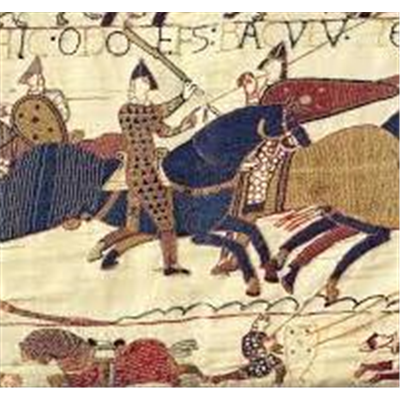 |
What is the Bayeux Tapestry all about? A power struggle, dynastic rivalries, broken promises, diplomtic relations in peril, military prowess and the building of a super power? How was this amazing document in stitch made, when and possibly why? What has been the history of this brilliant but fragile object throughout its life? Its conservation has brought new data to light. How important is this piece of history as an object to foster 'entente cordiale' and to link nations today? Formerly a curator and Print Room Superintendent at the British Museum, now Art History Education Officer in the Department of Learning & National partnerships at the Museum. Lectures for BM and Wallace Collection. Founding Artistic Director of the Arts Society of North Kent. Specialist in 17th century art and has published on Rembrandt. Hilary has vast exerperience of giving gallery talks, of lecturing and of leading art history tours in the UK, Europe, New York and Boston. For the Royal Collection Trust, she has guided Special Interest Private Tours of the State Apartments at Buckingham Palace. |
|
| Monday, 09 November 2026 |
| Paintings Inspired by Poems |
| Raymond Warburton |
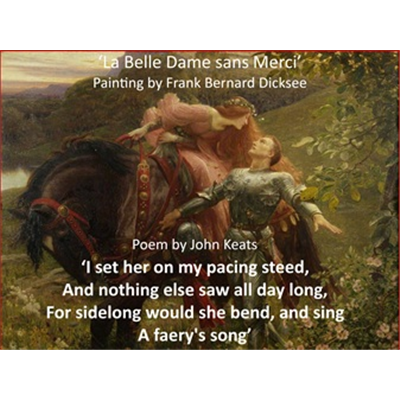 |
This charming and insightful lecture will truly engage your members, as some of them will play an active part. There has been, and always will be, a strong link between art and literature, and this unique lecture focuses on one aspect of that link; namely paintings inspired by poems. To provide a structure, 12 paintings and poems that inspired them will be discussed. The paintings all date from 1800 and were painted by British artists. The poems were written by writers from across the eras and from a range of different countries. Ray has had a life-long love of art. However, in his twenties, Ray studied social sciences at the London School of Economics and the School of Oriental and African Studies. These studies led to a career in health and social care, with art being an evening and weekend passion. But all that changed in 2011 when Ray became a guide at Tate Britain and Tate Modern. then from 2014 to 2017, he studied art history at the Open University, and then at the University of Buckingham, from where he gained an MA in the History of Art. And to cap it all Ray became an Arts Society lecturer in 2017. Ray also knows that it's like to be on the receiving end of lectures as he is a member of his local Arts Society in Blackheath. |
|
| Monday, 14 December 2026 |
| The Art of Trickery: How Magicians are seen in paintings, prints and cartoons |
| Ian Keable |
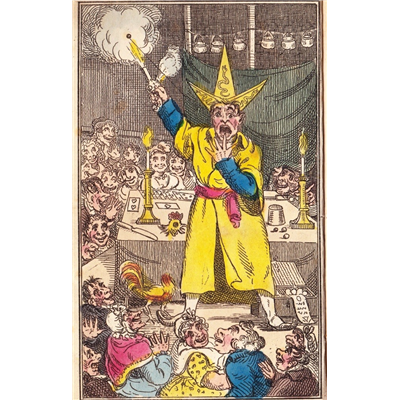 |
This talk is on how magicians have appeared in art throughout the centuries, whether in paintings, satirical prints or cartoons. Early artists used the magician to symbolise the mysterious and the unknown, associating them with astrology. In the 16th century Peter Bruegel and Hieronymus Bosch produced two of the most famous and striking pictures of the conjurer performing the Cups and Balls trick. The 18th and 19th century saw a proliferation in engravings and lithographs showing the magician both indoors and on the streets. Ian Keable gained a First Class degree from Oxford University, qualified as a Chartered Accountant and then became a Professional Magician. In 2014 he published Charles Dickens Magician: Conjuring in Life, Letters & Literature. His latest book is The Century of Deception: The Birth of the Hoax in Eighteenth-Century England. He now divides his time between performing magic, giving talks and researching and writing. He is a Member of the Inner Magic Circle and in 2024 was appointed the Archivist of The Magic Circle. He is presently writing a biography of David Devant, the first President of The Magic Circle and considered to be England's greatest ever magician. |
|
| Wednesday, 13 January 2027 |
| The Sahara As Palimpest: From Rock Art and Myth...to Klee, Matisse, Schulz and Lucas |
| Eamonn Gearon |
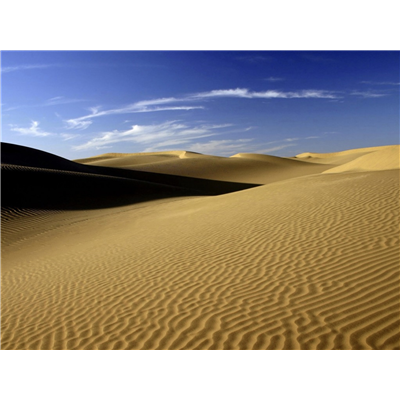 |
ZOOM LECTURE The Sahara has inspired the artistic and cultural life of the West for millennia, and this eye-opening presentation allows us to journey there with no risk of getting lost in a sandstorm! Whether resident, foreign adventurer, or armchair traveller and artist, the deserts of North Africa are a palimpest upon which poets, painters, filmakers and other dreamers have been inspired by and drawn to for millennia. The Sahara proved as vital for the oracles of Ancient Greece as it has for the high priests of Hollywood, and North African landscapes have witnessed the creation of both stunning prehistoric rock art and Impressionist canvasses; inspired mythology and faith; and been a muse for ever. Eamonn Gearon is an author, historian and recovering journalist, who lived and worked across the greater Middle East - from Kabul to Casablance - for more than 20 years. As well as living in the Sahara with the Bedu, Eamonn conducted a number of solo, camel-powered expeditions...and has never lost money when re-selling a camel! The author of three, multi-million lecture series on Middle Eastern history and culture for ~The Great Courses, in addition to entertaining general audiences. Eamonn also designed and is responsible for delivering Middle East and North African (MENA) area studies training for both the British and American governments, at the US Department of State and FCDO (ex-FCO) respectively. Eamonn's a highly experienced speaker who has spent years deliverying entertaining and educational presentations to audiences of all shapes and sizes, including the universities of Oxford and Harvard, scientific and geographical societies, aboard Queen Mary 2, and in scores of other venues on both sides of the Atlantic and across the Middle East and North Africa. |
|
| Monday, 08 February 2027 |
| Les Parisiennes: How Women Lived, Loved and Died in Paris from 1939 - 1945 |
| Amme Sebba |
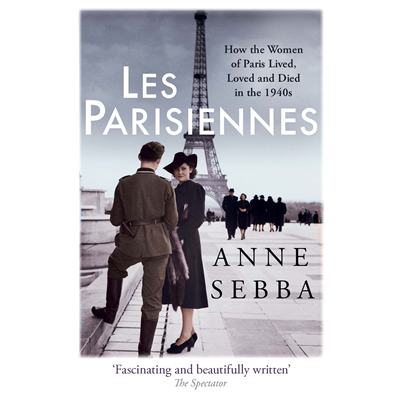 |
Les Parisiennes is a story about women's lives during the dark years of Nazi occupation and beyond and includes British and American women caught in Paris as well as native born residents who were eventually sent to camps, couturiers and jewellers, some of whom flourished in wartime, as well as actors, singers, night club dancers and housewives. The lecture opens with a magnificient surrealist circus ball held by Elsie de Wolfe at the magnificent Villa Trianon, a Louis XV chateau in the grounds of Versailles. Biographer, historian and award winning author of eleven books who lectures to a variety of audiences iin the US and UK, including the English Speaking Union, Royal Overseas League, National Trust, British Library, Imperial War Museum and on several cruises. A former Reuters foreign correspondent, Anne is now a broadcaster who has presented documentaries for Radio 3 and Radio 4 and regularly appears on television talking about her books, mostly biographies including Jennie Churchill, William Bankes, Laura Ashley and Wallis Simpson. The latter, published as That Woman, was an international bestseller following in 2016 by a history of Paris between 1939-49 through women's eyes entitled Les Parisiennes, How the Women of Paris Lived, Loved and Died in the 1940s, winner of the Franco British book prize for 2016. In 2021 she published Ethel Rosenberg, A Cold War Tragedy, which is under option for a feature film. Her latest book is The Women's Orchestra of Auschwitz: A story of survival. Anne is a former chair of Britian's 10,000 strong Society of Authors, a Senior Research Fellow at The Institute of Historical Research and a Fellow of the Royal Society of Literature (FRSL). In 2023 she was selected as a judge on the inaugual Women's Prize for non-fiction. |
|
| Monday, 08 March 2027 |
| The Story of Kew Gardens: The World's Gardener |
| Cindy Polemis |
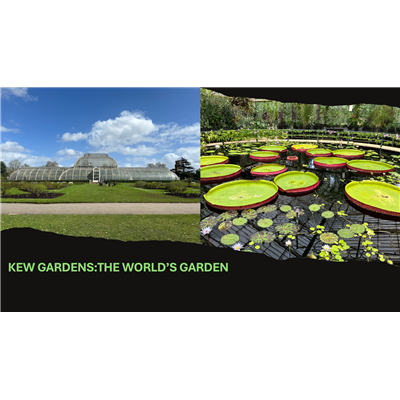 |
From the 18th century royal pleasure gardens to the most bio-diverse place on earth today, Cindy Polemis digs into the history of Kew Garens. We'll look at Kew's early role as a beacon of historical landscape aesthetic, its crucial part in the advancement of science, colonialism and trade, and how today it drives international efforts to combat the effects of climate change and the threats of extinction in the natural world. Kew scientists have collaborated with police forensic investigations; thwarting illegal timber trades, solving gruesome murders and identifying poisons are just some of the ways they have helped combat crime. Today Kew holds the largest and most diverse collection of plants in the world: 30,000 living plants, some extinct in the wild, 14,000 trees, nearly 8 million dried specimens and more than 2.4 billion seeds - it is truly the world's most important garden and one which has changed, and continues to change our world. Cindy Polemis studied history at Oxford University and as a mature student she graduated from Birkbeck College, London University with a B.A and M.A in History of Art. Cindy is an accredited lecturer with The Arts Society and spent many years as a radio producer and presenter for the BBC World Service, Since 2016 she has been an official art guide at Tate Modern and Tate Britain, as well as being an official guide for Frieze Masters Art Fair in London. She has accumulated a wide range of art historial knowledge, ranging from 18th century British and European art to the contemporary art scene. |
|
| Monday, 12 April 2027 |
| Climbing Great Buildings |
| Jonathan Foyle |
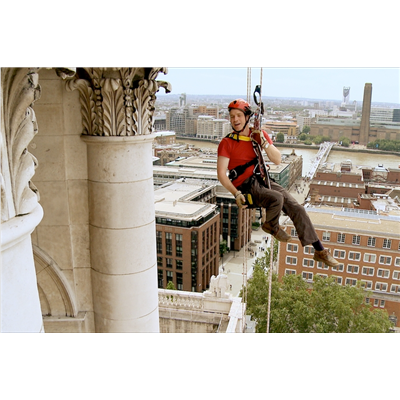 |
In 2010, a BBC series Climbing Great Buildings featured 15 of Britian's greatest landmarks over the last 1,000 years. It was presented by the speaker, who reviews the selection and shares the secrets found in carved and structural details that are often invisible from ground level, but which tell a fuller story of some of the greatest achievements in our historic cities. Dr. Jonathan Foyle is a career communicator, best known for presenting TV series such as BBC2's Broadcast Award-winning 15 part 'Climbing Great Buildings' a well as contributing to Channel 4's 'Time Team' and Channel 5's 'Secrets of the Royal Palaces' His former roles have encompassed Curator at Hampton Court and Chief Executive of World Monuments Fund Britain, writer for the FT Weekend, and he is now a lecturer at the University of Bath. Jonathan has authored seven volumes on great cathedrals and castles and has spoken across the world about discoveries in British arts. The offered Art Society talks offer fresh and original analyses of personal fascinations in architecture and the arts and crafts, especially their all-important symbolism, through which we can better understand what their makers were trying to comunicate - to anyone who holds the keys to deciphering. The aim of these talks is to share those keys, in friendship and with a sense of humour. |
|
| Monday, 10 May 2027 |
| Adventures in 3-Dimensions: Sculpture in C20 Britain |
| Justine Hopkins |
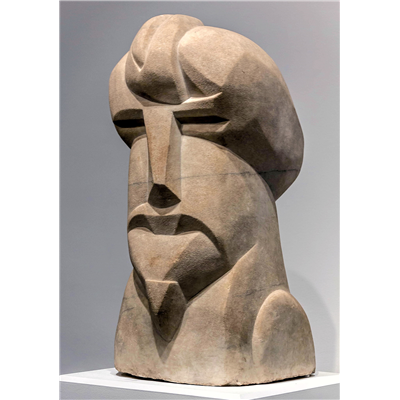 |
Modern sculpture is often considered difficult, inaccessible. The works of Epstein, Moore, Hepworth, Frink and their contemporaries stand at the heart of our time, yet for many people it is easy to be intimidated where we should be enthralled. Sculptors in the twentieth century developed a three-dimensional language as flexible and expressive as music or poetry, capable of revealing the rhythms and meanings of life itself; their work should be approached as an exploration, an adventure, something to be enjoyed. This lecture sets out to prove that we can all be explorers. Justine Hopkins MA (Courtauld Institute) PhD (Birkbeck College) is a freelance writer and Art History lecturer, specialising in 19th and 20th century painting, sculpture and architecture. A regular at the V & A and the Arts Society, she also works for Oxford University and leads tours for Art Pursuits Abroad. Publications include Michael Ayrton: A Biography (1994) and articles for various journals, including one in Sculpture Journal on Serb sculptor Ivan Mestrovic (2016) and 'Trees in Art and Literature' for the Arts Society Magazine (Spring 2025) |
|
| Monday, 14 June 2027 |
| Edouard Manet and Music |
| Lois Oliver |
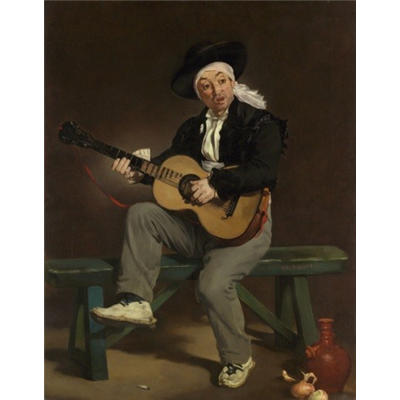 |
Music was a constant theme in Edouard Manet's life and art. His wife Suzanne Leenhoff was a gifted pianist, and regular musical soirees were held at the Manet family home. His pictures of musicians and their audiences range from major early canvases depicting itinerant gypsy musicians and Spanish dancers, through to paintings encompassing the full range of Parisian musical culture, from private performances to street entertainment, cafe concerts and the Paris Opera. Manet also designed cover illustrations for music composed by his friends. Dr Lois Oliver is Professor in History of Art at the University of Notre Dame in London, and a Visiting Lecturer at the Courtauld Institute. She has worked as a Curator at the V & A, the National Gallery, and the Royal Academy. Her recent exhibitions include 'Berthe Morisot: Shaping Impressionism' at Dulwich Picture Gallery and 'Jock McFadyen: 'Tourist without a Guidebook' for the Royal Academy. She has created audio and multimedia tours for many of the UK's leading art institutions and has appeared on BBC Radio and TV. Also a keen violinist, Lois plays regularly with Kensington Chamber Orchestra and Endellion Festival Orchestra. Lois studied English Literature at Cambridge University, and History of Art at the Courtauld Institute, completing an MA in Venetian Renaissance Art and writing her PhD thesis on The Image of the Artist, Paris 1815-1855. |
|
| Monday, 12 July 2027 |
| Dame Laura Knight DBE RWA RWS (1877-1970): A Life in Paint |
| Alison Bevan |
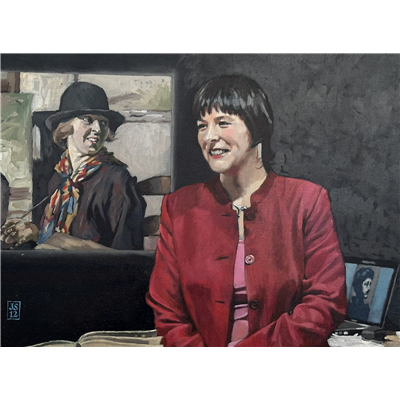 |
A true pioneer for her gender, Dame Laura Knight not only achieved a host of 'firsts' for a woman artist, but also became arguably Britain's most famous and best loved artist of the mid-C20th. Her talent showed itself at a remarkably young age - she was just 15 when she enrolled at Nottingham School of Art - and remained with her throughout her remarkable and long life. Focussing primarily on her time in Cornwall, this talk also looks at her incredibly wide oeuvre, taking in ceramics and print making as well as painting and subjects as diverse as circus and ballet to the Nuremburg Trials. Alison Bevan is an acknowledged expert on the Newlyn School, and her book,'The Art of the Newlyn School: Paintings of Cornish Life and Light' is being published by Sansom & Company in October 2026 to accompany a national touring exhibition she has curated. Since graduating in History of Art from Nottingham University in 1986, Alison Bevan (nee Lloyd) has spent her entire career working in public art galleries. Starting out at the Graham Sutherland Gallery in her home county of Pembrokeshire, she then spent ten years organising and curating exhibitions at the Glynn Vivian Art Gallery in Swansea, where she honed her broadcast media skills, including presenting a weely Arts News feature on BBC Radio Wales, 1995-6. In 1999, Alison took up the role of Director of Penlee House Gallery & Museum, Penzance. It was here that she gained her expertise on the Newlyn and Lamorna artists' colonies (1880-1930), a subject on which she has lectured in the UK, USA and France. She raised the profile of this area of art through initiating national and international touring exhibitions, and contributing to numerous publications and television programmes, and in 2013 was awarded the British Empire Medal for services to Cultural Heritage in Cornwall. From 2014 - 2024, Alison was Director of the RWA( Royal West of England Academy) - Britain's only regonal Royal Academy of Art: an extraordinary historic institution whose Academicians have including leading figures of the Newlyn School and Bloomsbury Group, and today include Sir Peter Blake, Sir Frank Bowling and Eileen Cooper. New based in Chepstow and working as a freelance lecturer, curator and consultant, she is also Chair of British Museums' Oversight Board; a Fellow of the Museums Assocation and an Honorary Research Fellow at the University of Bristol. |
|